
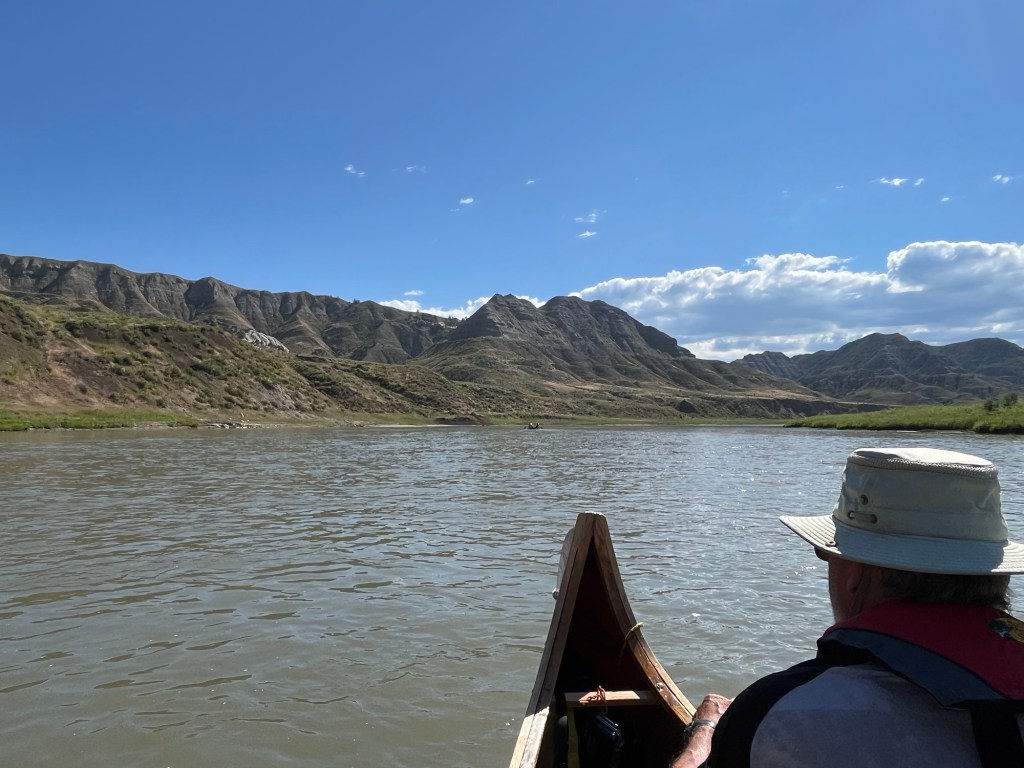
This morning was a big breakfast before our second section in the Montana wilderness of the Missouri River Breaks. We all ate pancakes, eggs, bacon ,and sausage and drank coffee. Normally, I have to say that a big and heavy breakfast like this is unusual, but it felt like today was a bit of a celebration as it would be the last leg of our journey along this section of the Lewis and Clark Trail.
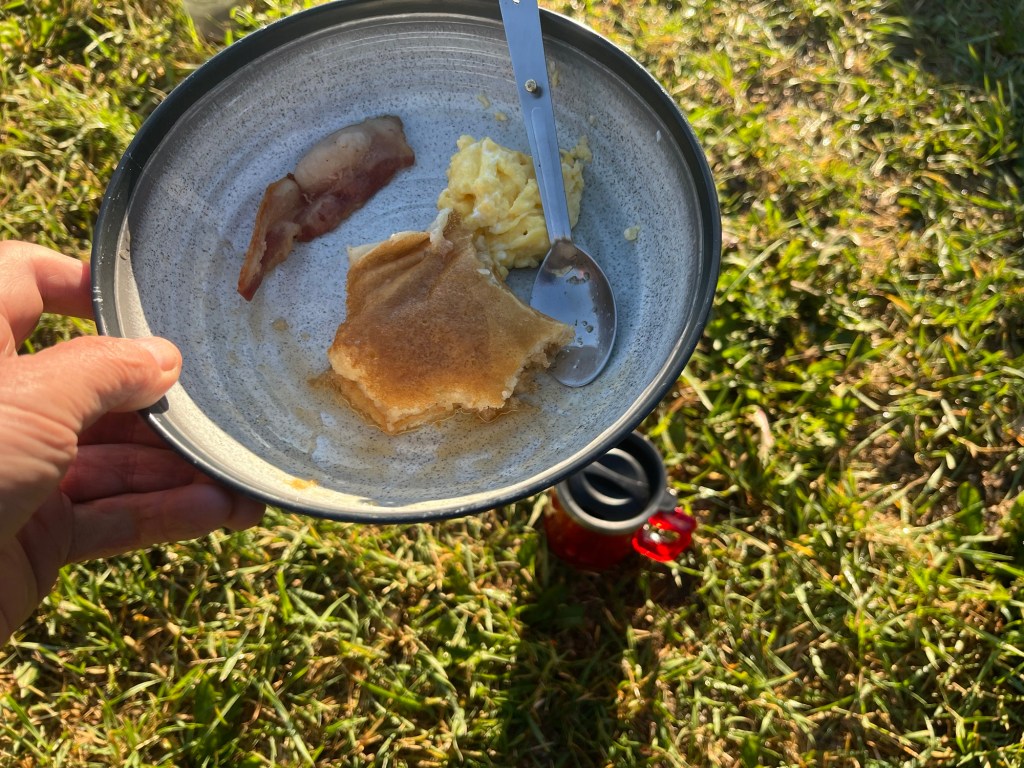
We were on the water by just after 9am and on our way through a 55km paddle to what I thought was McGarry Bar – but it wasn’t to be. As we were paddling this last reach of the river in 2 days instead of 3 days, our destination was Gist Bottom where Bullwacker Creek flows into the Missouri River.
‘The river bluffs still continue to get lower and the plains leveller and more extensive: the timber on the river increases in quantity.’
June 2, 1805 Meriwether Lewis
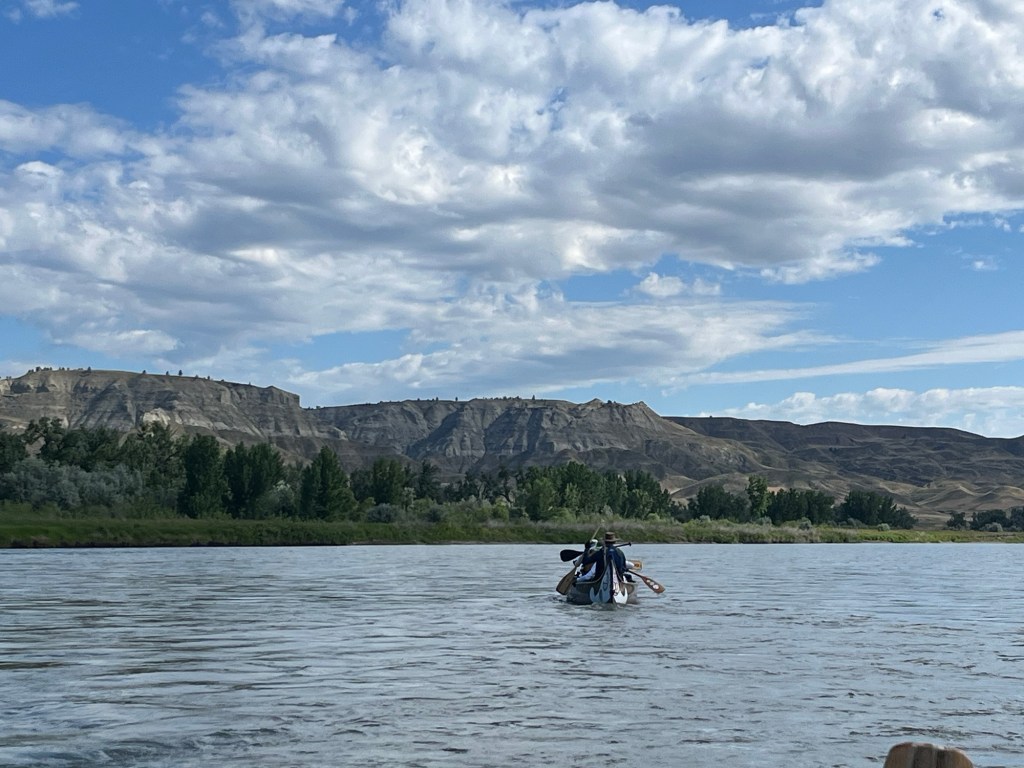
The songs of Meadowlarks were everywhere today it seemed. And at the beginning of the paddle it was hot – the kind of hot where you can actually smell the heat. That didn’t last long and, a couple of hours in, the storm we seem to have been chasing was upon us. It never really dumped a lot of water on us, just enough to soak our rain gear through!
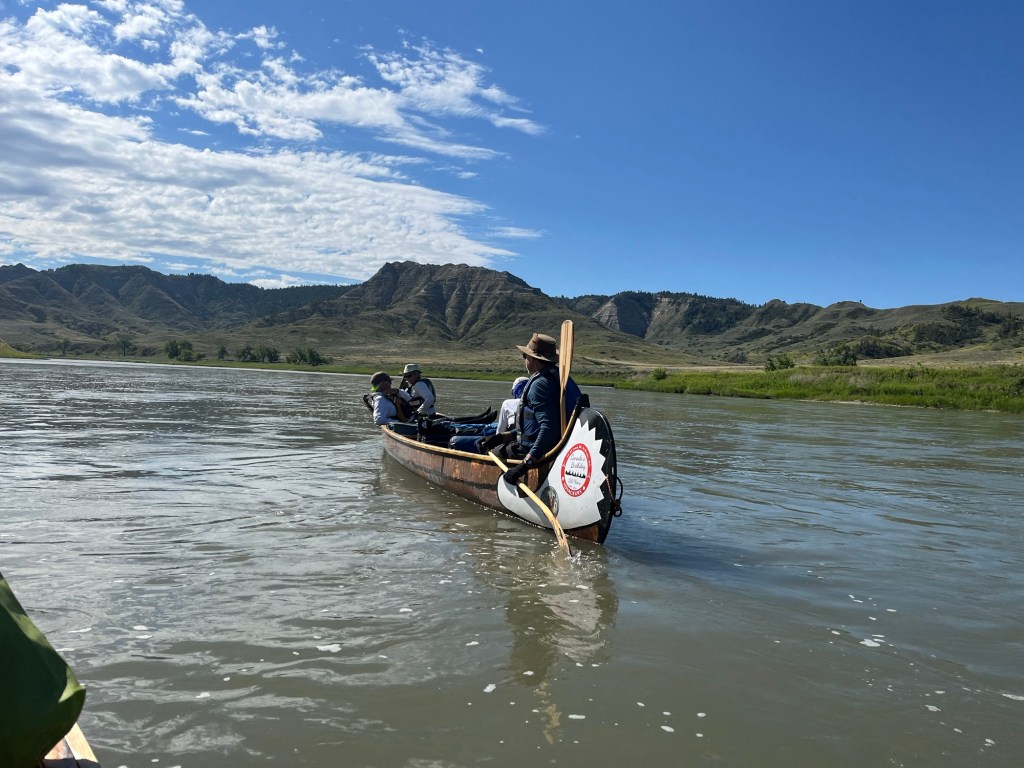
Merle and his crew had pulled ahead of us and out of sight around a bend in the river toward the end of the day. That left us (Bob, Chuck, Gene, and me) with the decision to pull to the riverbank when the lightening started. It rained off and on for a little over an hour as we waited to count the thunderclaps in the distance and know we’d be safe pulling into the river’s current again.
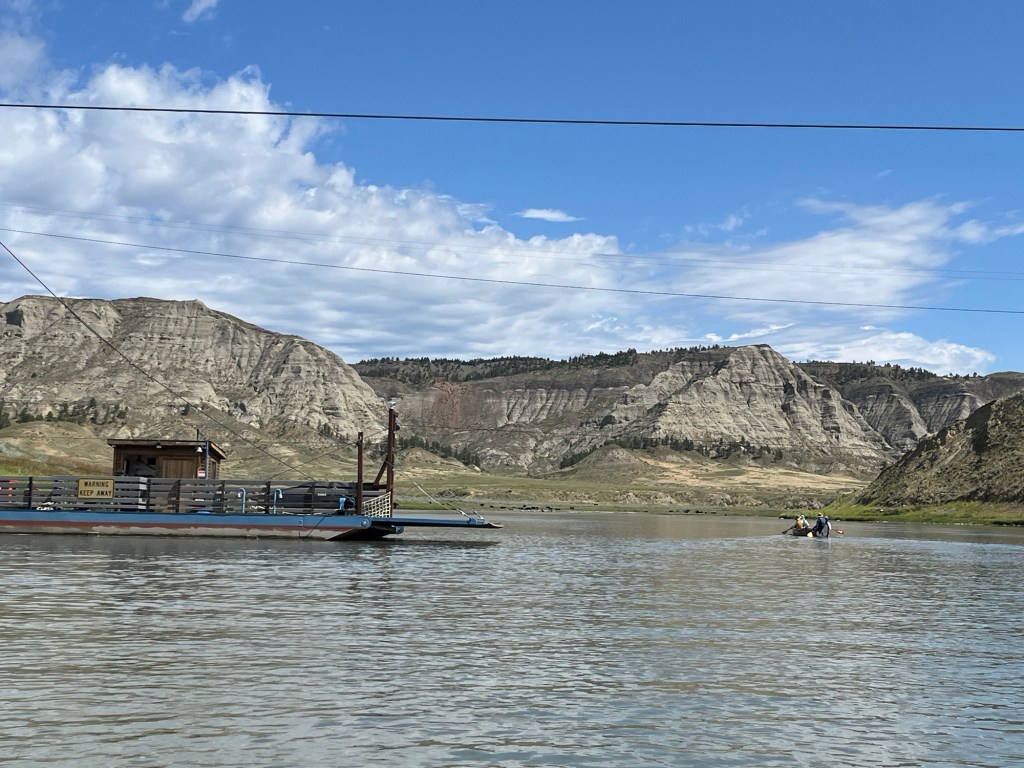
Finally, the action seemed far enough off to the east that we got under way for the last 5km paddle into Gist Bottom Campsite on river left. A curiosity when we landed was the river water – it had changed from a dingy brown to a dark chocolate and was filled with debris. This was the result of a flash flood that roared down Bullwacker Creek just minutes before we arrived.
Now, this campsite is what is listed as a ‘primitive’ campsite by the Bureau of Land Management. They are right…it is primitive – especially in the fact there is no pit toilet. Not to worry though, we had our very own ‘Luggable Loo’ – the BLM is anal about waste management (get it..anal), so you have to pack everything out. I mean ‘everything’. 🙂
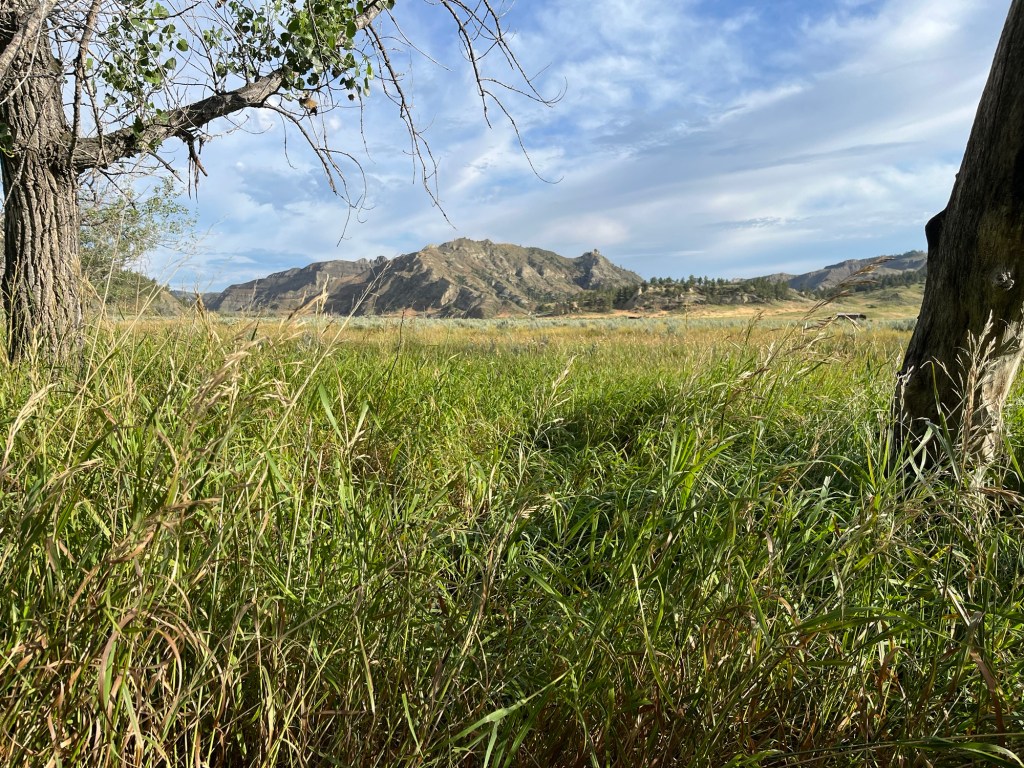
Now, let me put you at a little ease at this point. The Luggable Loo isn’t half bad, and when it’s tucked away behind a small copse of cottonwood trees 50 metres away from the campsite, it’s quite private. In fact, in our case, the view out over the Bullwacker Creek valley is very picturesque I thought! 🙂 What do you think – here’s a photo I took sitting there. The challenge with the Luggable Loo, of course, was that we had to really hunt for a good location because the 2 other groups of canoers and kayakers had already placed their own Luggable Loos. Nevertheless, we made it work.
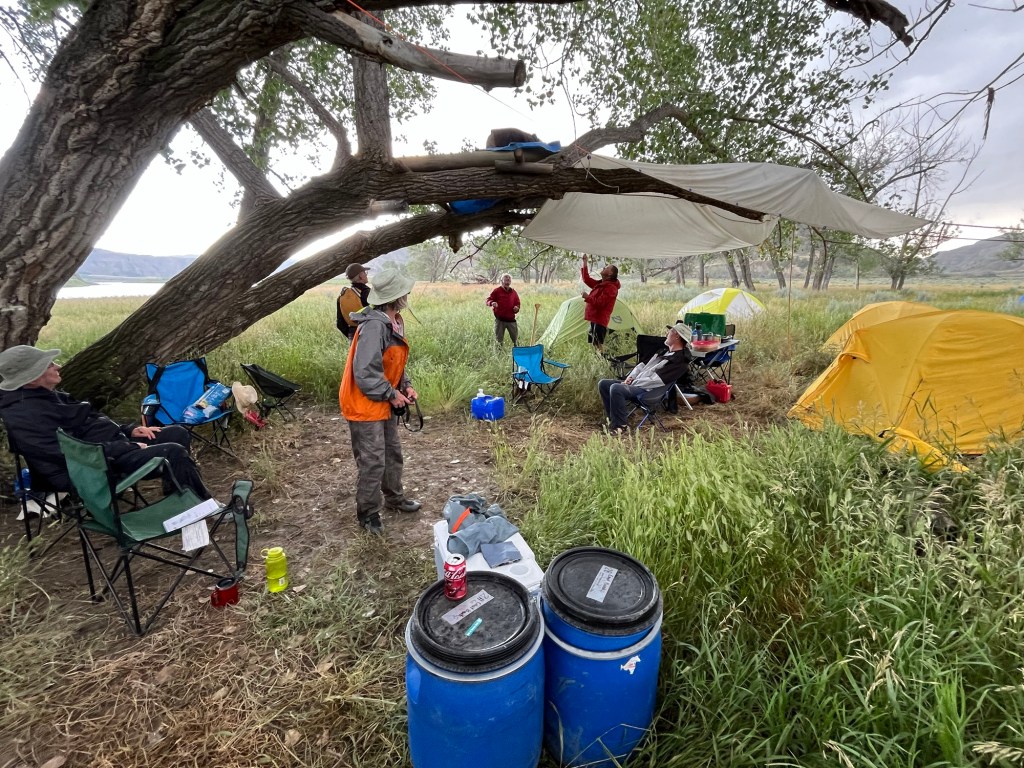
When we arrived in Gist Bottom, the wild thunder and lightening storm that had skirted us a bit as we sat on the riverbank had hit the campsite and Merle’s crew full on. Fortunately, I think most of them had pitched their tents before the deluge hit, and when we arrived their gear was ashore and they’d even set up a large tarp draped over some overhanging cottonwood branches for a bit of shelter for a few folding chairs and the cooking table.
That left us to off-load our gear and that was a chore after the rainstorm. The riverbanks for most of this journey are made of a mineral called Bentonite. Now, if you don’t know what that is, it’s a sedimentary deposit of supper fine material – in fact, it is so fine that it is literally non-abrasive and is used in toothpastes and as a slurry agent in drilling operations because of its non-abrasive qualities. Its other characteristic is that it clumps up in absolutely spectacular ways on your footwear. Climbing up and down the steep-ish river bank, we all ended up with shoes/boots the size of a small beer keg and twice as heavy. Yes, a primitive campground!
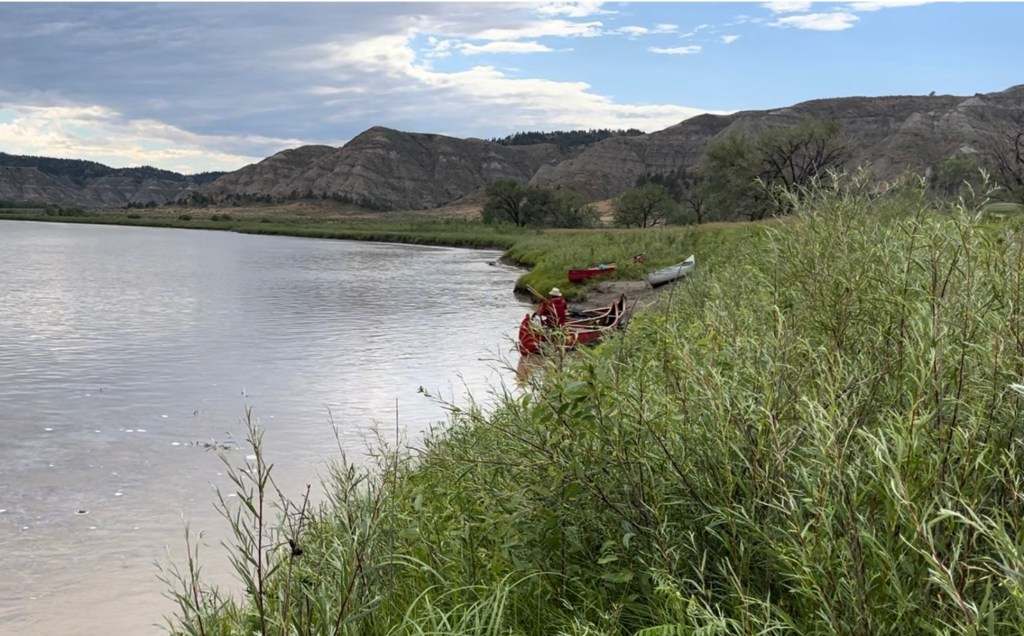
We had tucked into shore about 4:30, and the rest of the day was…well…soggy. The sun did come out and a few of us were able to pitch our tents in the warmth of sunshine and pick somewhat drier spots, but I would still class it as soggy!
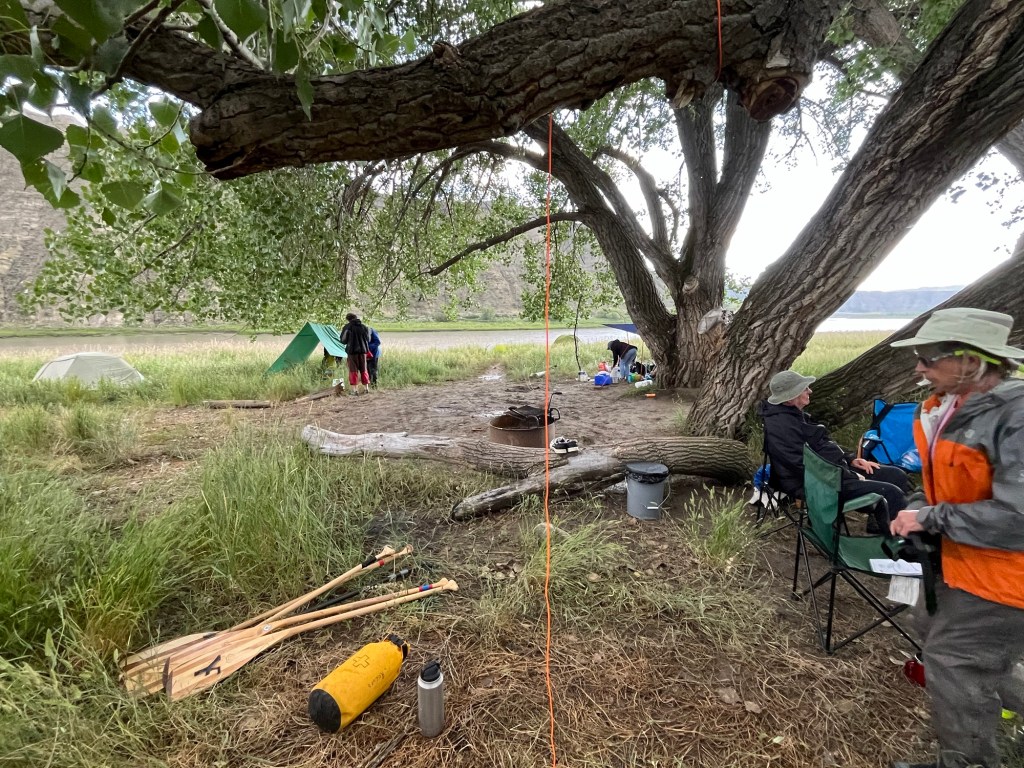
The antidote to that was a wildly hearty beef stew that Kris had concocted and frozen. We loaded it aboard when we left Judith Landing and it was a welcome treat at the end of the long wet day. We also had a few chats with the other canoe and kayak groups camped in the area. They looked just as soggy as us and were short of water, so we passed them one of our 2.5 gallon jugs to get them to their take out at the Kipp Rec site.
That was the day – except, again, for a night sky filled with countless stars!
‘Between the time of my A.M. and meridian observations, Captain Clark and myself strolled out to the top of the heights in the fork of these rivers from whence we had an extensive and most enchanting view: the country in every direction around us was one vast plain in which innumerable herds of buffalo were seen attended by their shepherds the wolves;’
June 3, 1805, Meriwether Lewis
 The Missouri Breaks
Leave a comment