

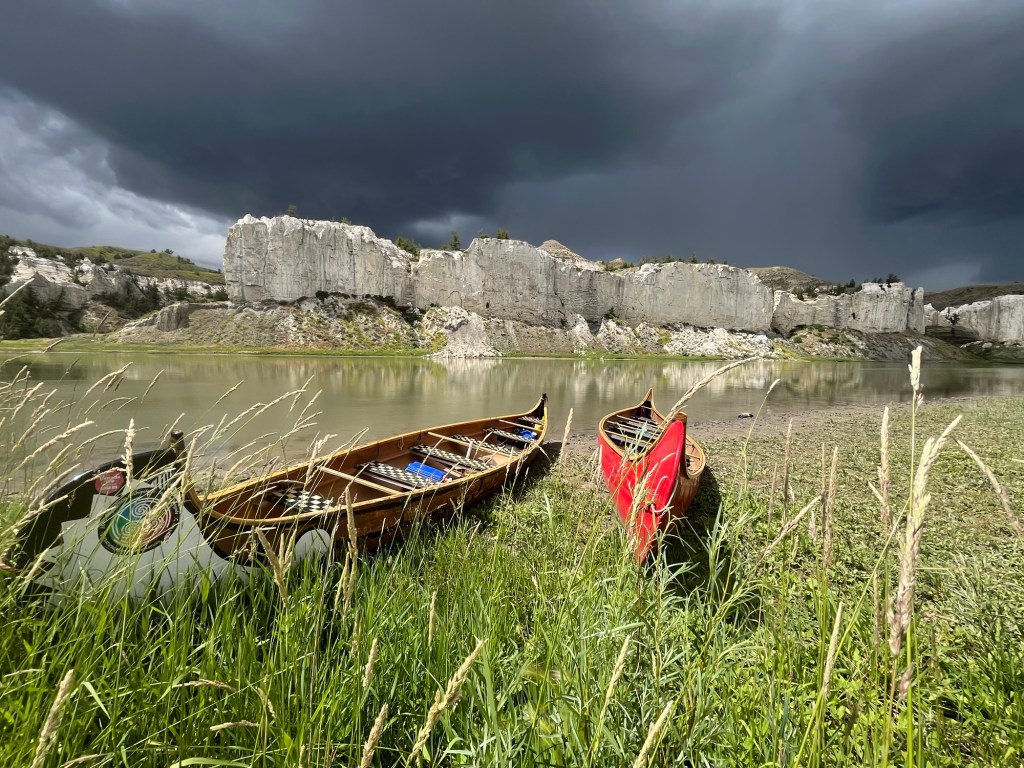
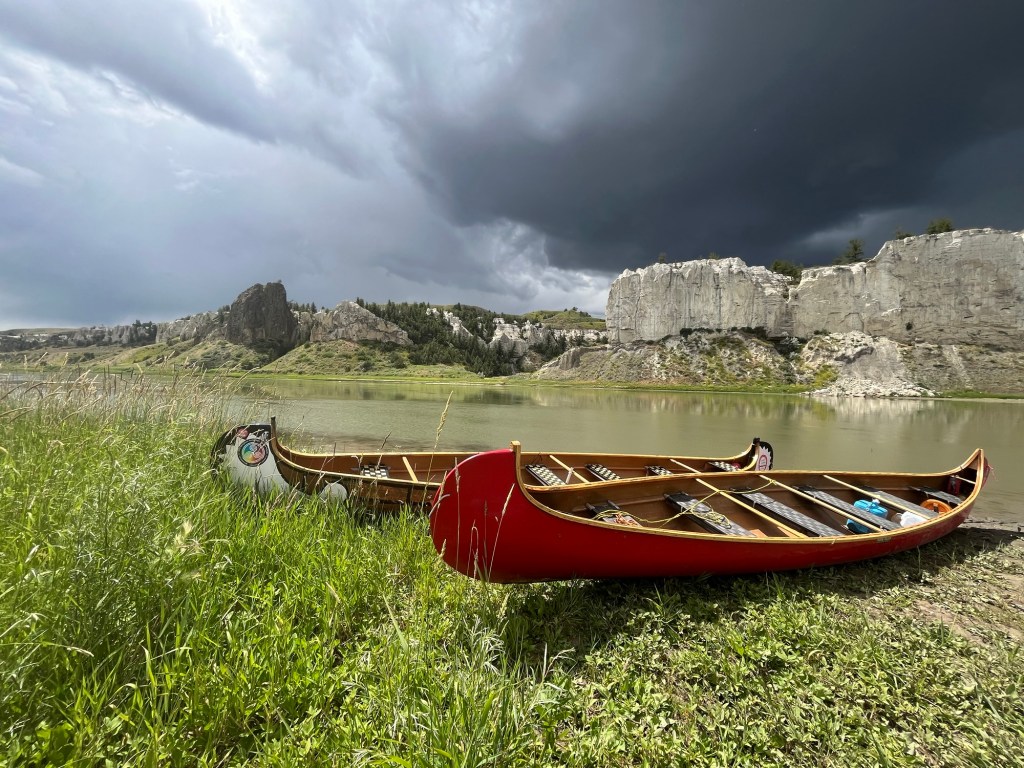
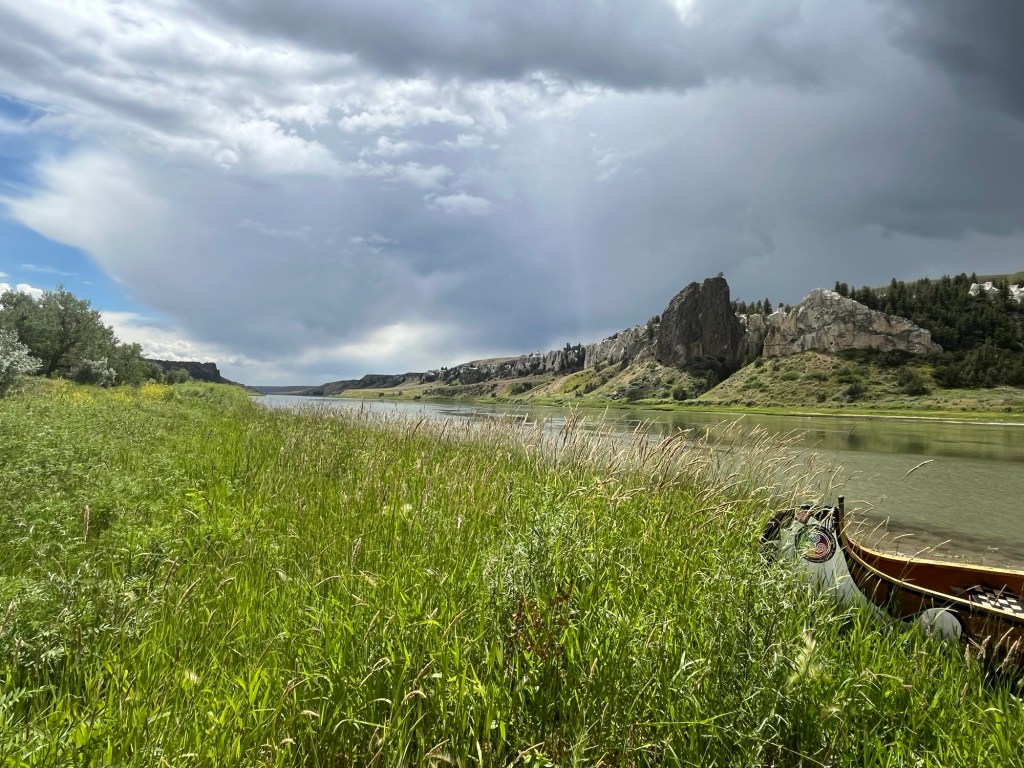
Right now I’m sitting at the Eagle Creek campground and relaxing after a great morning’s paddle. I’m also sitting here watching the dark, gun-metal blue/grey of a threatening thunder and lightening storm play as a backdrop to the famous white cliffs that mark this place so dramatically. It’s not raining yet…but it’s amassing with a vengeance if the thunder and lightening are any indication.
This was about a 23km paddle – so nothing too arduous. Accordingly, no one was too worried about getting up and out at the crack of dawn. Furthermore, Kris tells us these next 3 days paddle will take us through the most beautifully sculptured landscapes along this stretch of the river…so why rush it.
For the next 3 days and 2 nights, we’d be in the more remote wilderness sections of the Missouri River. To that end, our packing included all the camping gear you’d suspect we would take – tents, sleeping bags, cooking stove and utensils, safety supplies, satellite phone. One of the more important things we pack for this reach of the river is water. The river water is not potable – you can’t even filter it and drink it (largely due to chemical agricultural pollution I gather). So we load a gallon of water each per day plus some extra…just in case.
As we paddle out from Coal Banks, the water is moving faster than I think most of us anticipated and in many places we’re getting up to 12-15km/hr in spots where the river narrows a little. There are no ‘rapids’ on the river, but this faster water is far more exciting than having a simple ‘float-in-a-boat’.
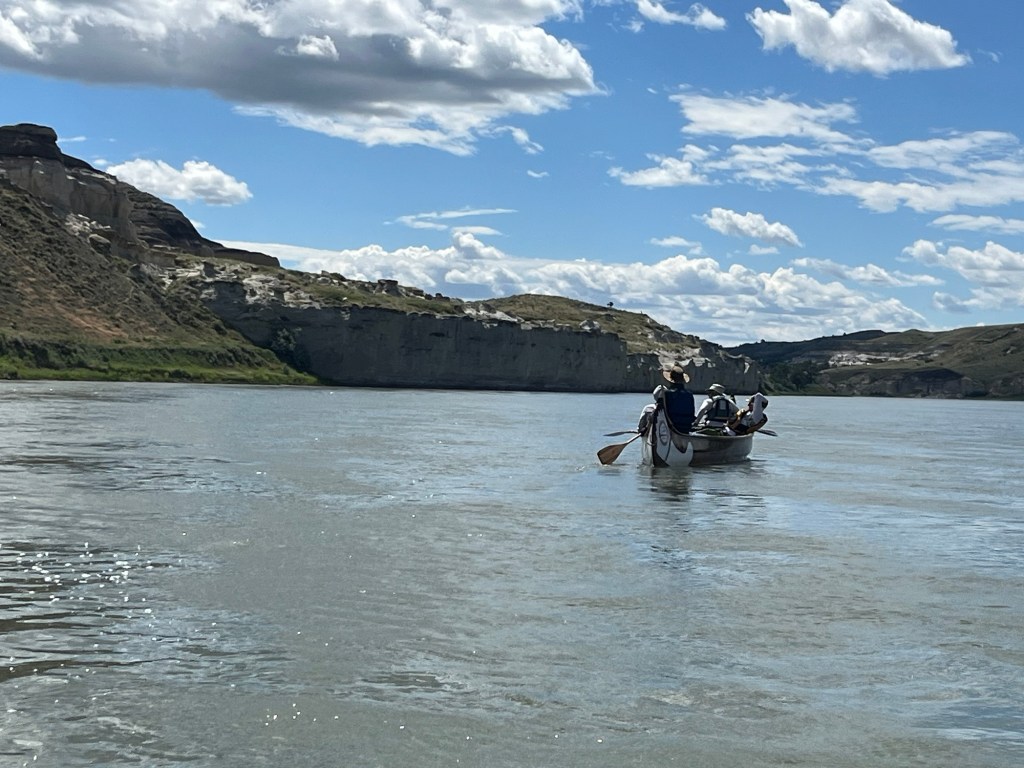
This was our fourth day paddling and I think everyone was feeling like they were finding their water legs a bit – and our shoulder muscles were certainly cooperating more and we limbered up. Changes were smoother I think and, sitting in seat 2 behind Gene, I know I was keeping count better too.
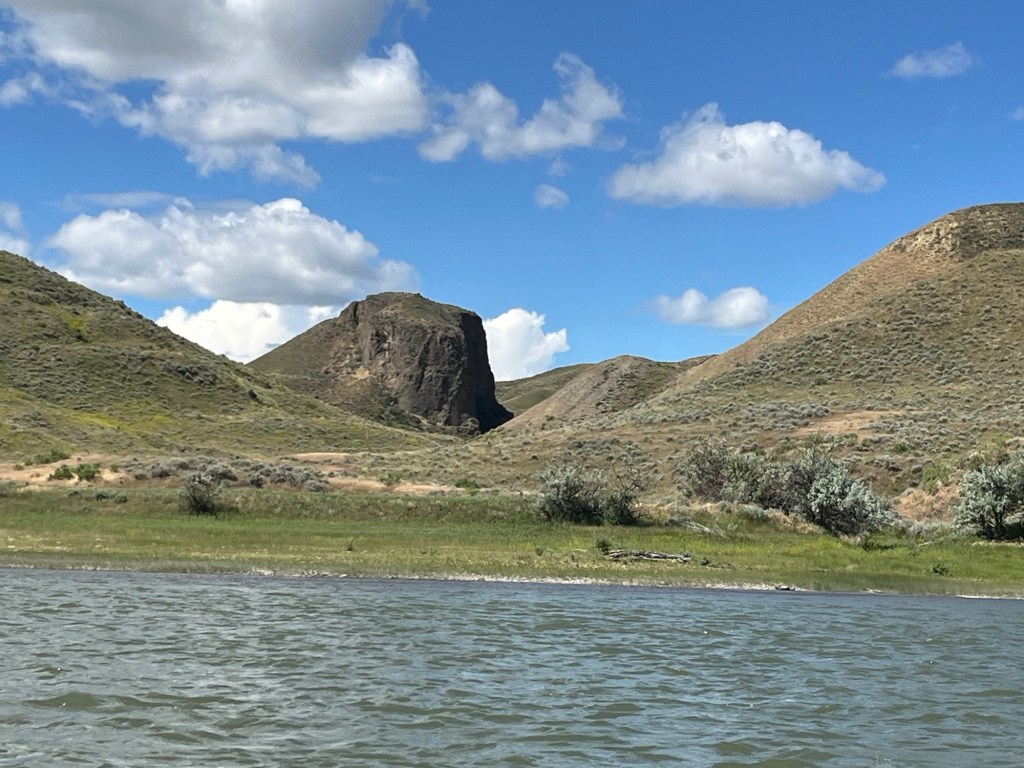
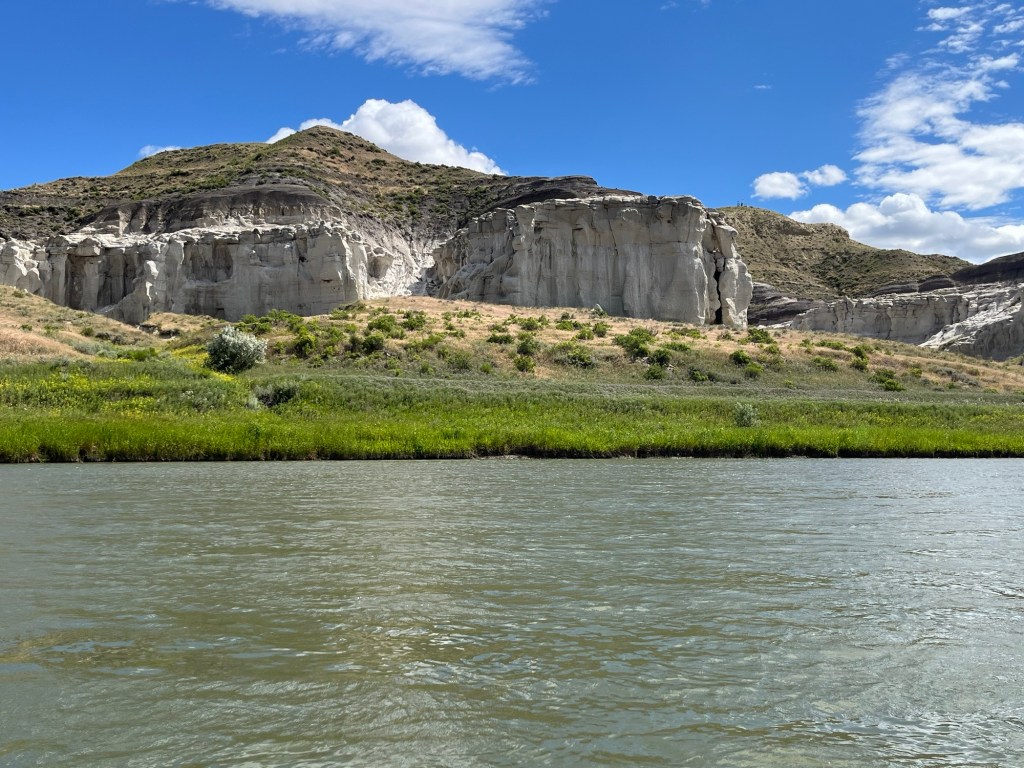
The scenery here gets more dramatic the further we paddle this section of the river. The height of the flanking cliffs gets steeper and shows all manner of sculpted erosional features. Huge flat slabs of stone exfoliating off the cliff faces, differential erosion making table-top like formations and, in places, some of this sandstone rock is cut high and sharp by harder volcanic dikes that sheer their way through the softer stone bedding.
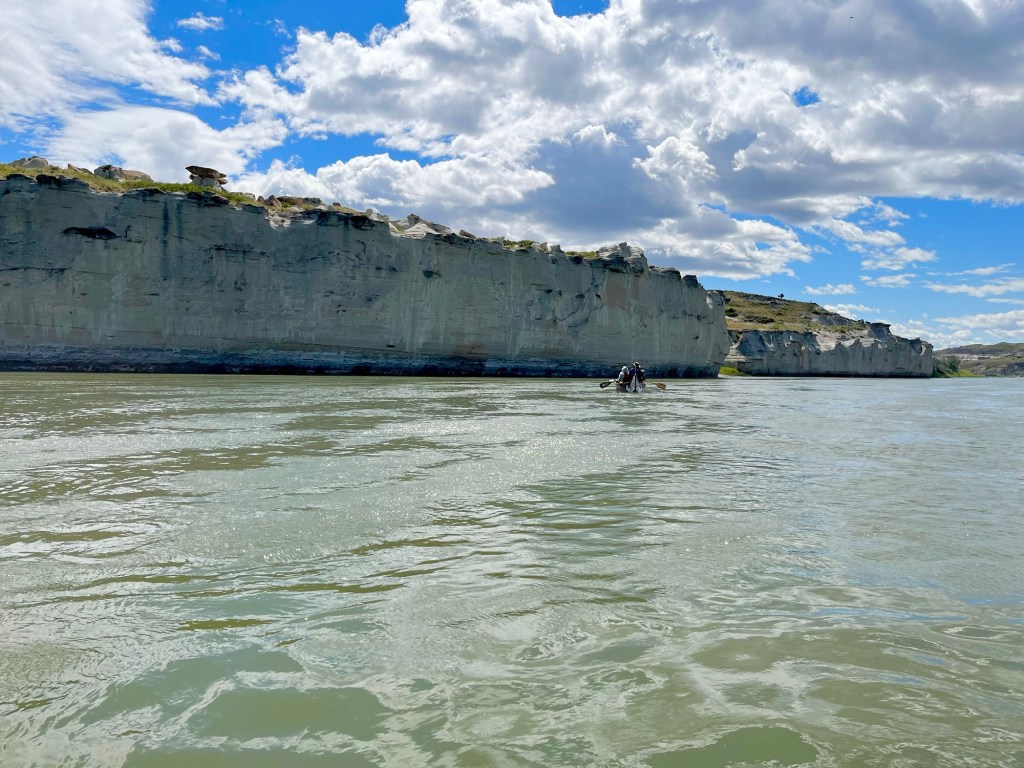
For time to time, we also see the remnants of hard, high, and pronounced volcanic plugs. Their dark rock is a sharp contrast to the light beige sandstones that dominate the space. In most places, the dramatic geology is on one side or the other – rarely on both sides, at least, in any proximity to the river.
Our campsite at Eagle Creek is by far the most picturesque setting so far on this trip. This is a developed BLM campsite (ie. it has pit toilets, thankfully), and the riverbank is a bit more shallow, so we were able to pull the canoes fully onto shore. There is a large enough grassy area for everyone to have lots of room to pitch their tents, set up the kitchen area, and generally not be too congested. And the pit-toilet was only about 30 metres away!
Shortly after we arrived and got set up, Kris led a few of the group out onto a hike to the Slot Canyon in the hills just behind our campsite. While I didn’t go on this walk, I gather it was a wonderful sight. The afternoon and evening were marked by period of light rain and sun.
At one point, mid afternoon, we expected to be hit with biblical rains. For some time we’d been watching a steel-blue/grey sky thicken just upriver from our site. We could see lots of lightening and hear lots of rolling thunder across the wilderness and it seemed to come from all directions. Thankfully, that storm simply and gently skirted our location and gave us the opportunity for some o f the more spectacular photos I’ve been able to take on these many wilderness canoe trips!
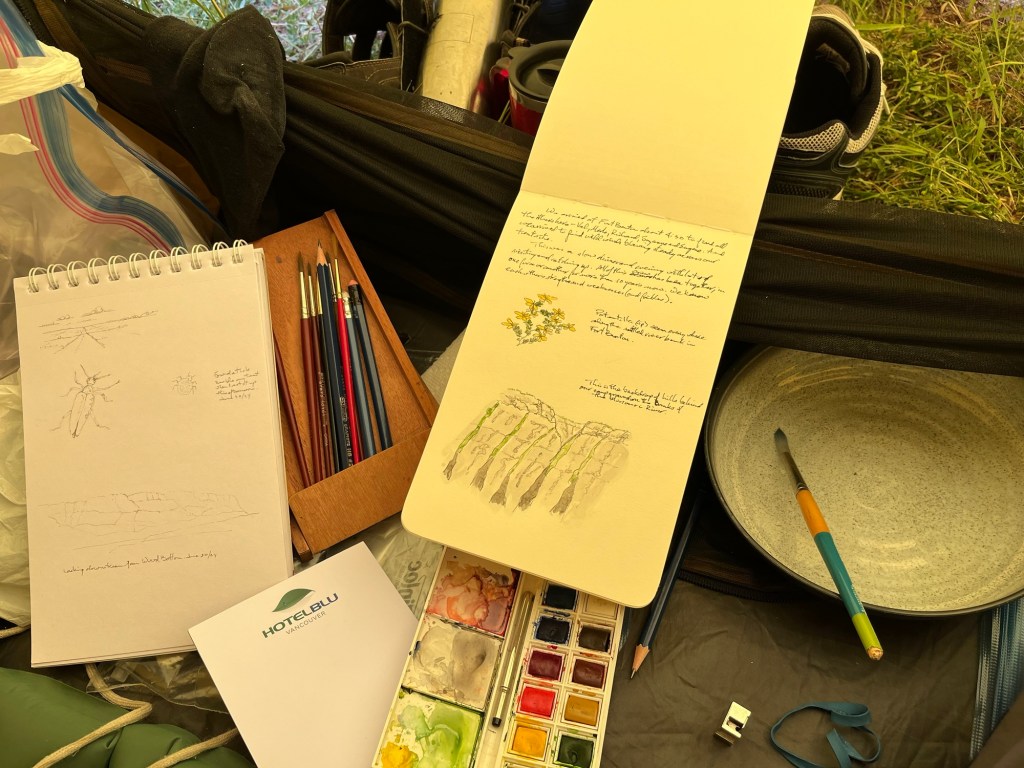
Like most nights so far on this trip, we were all tucked in by 9pm.
 The Missouri Breaks
Leave a comment